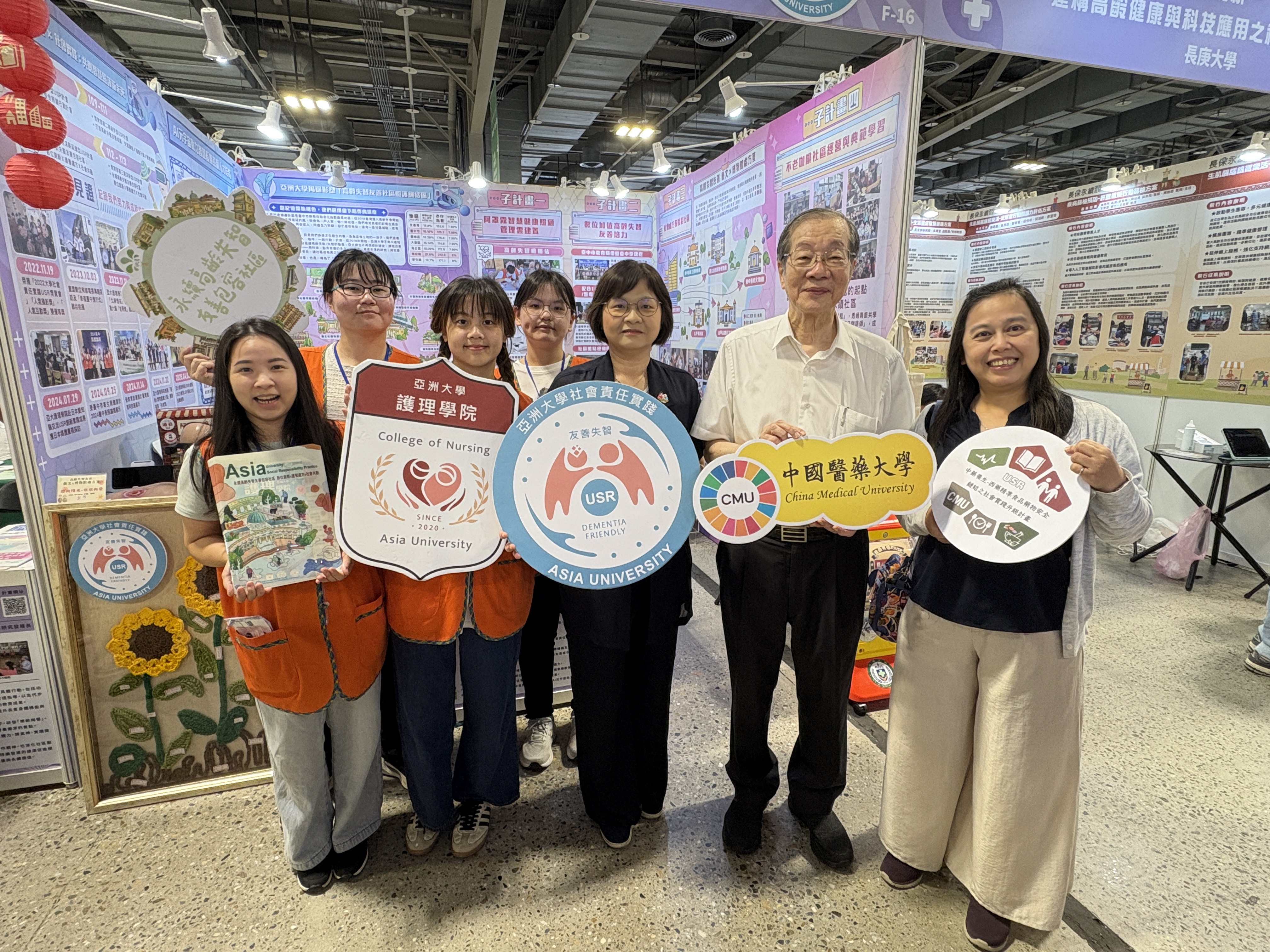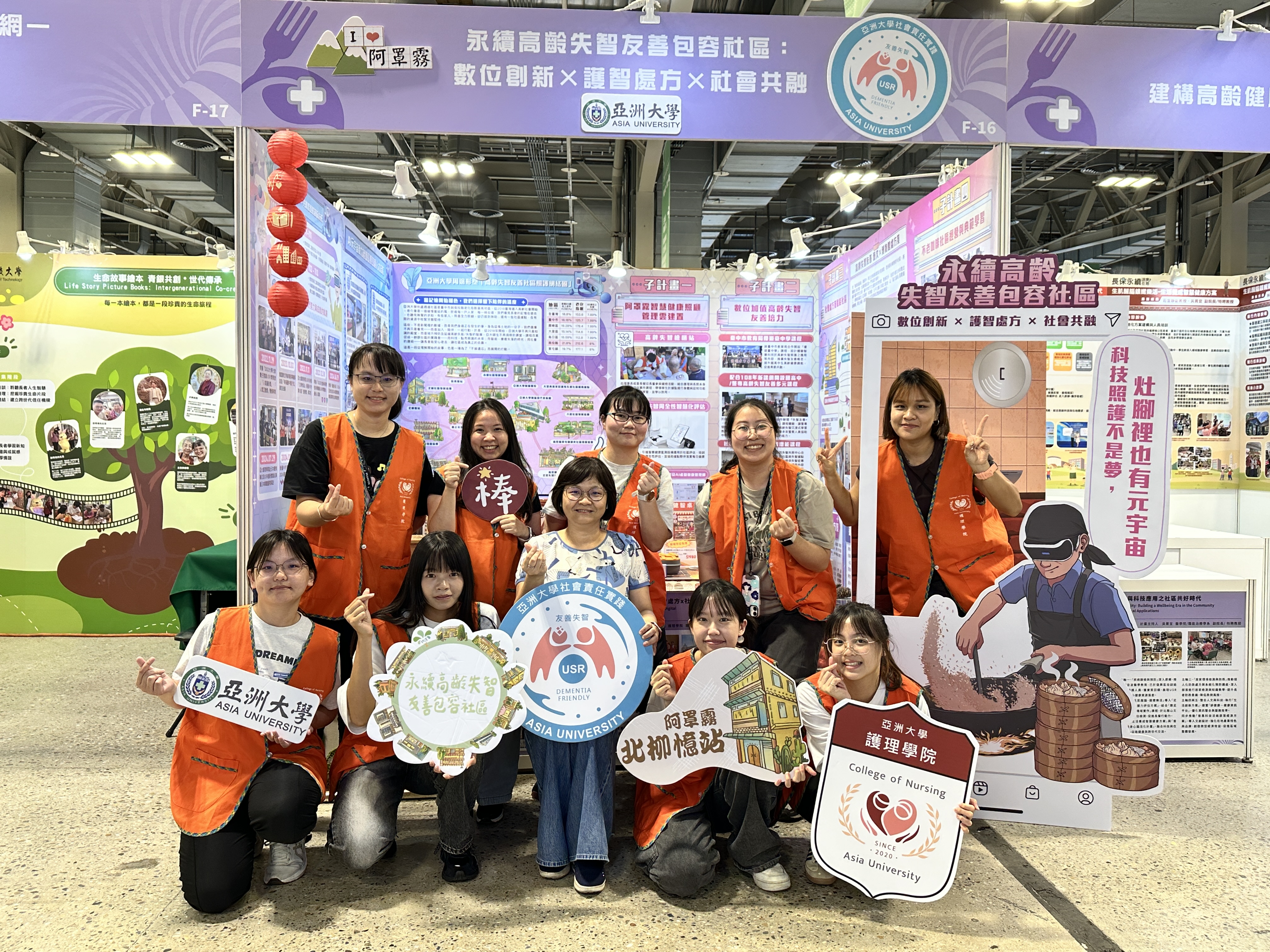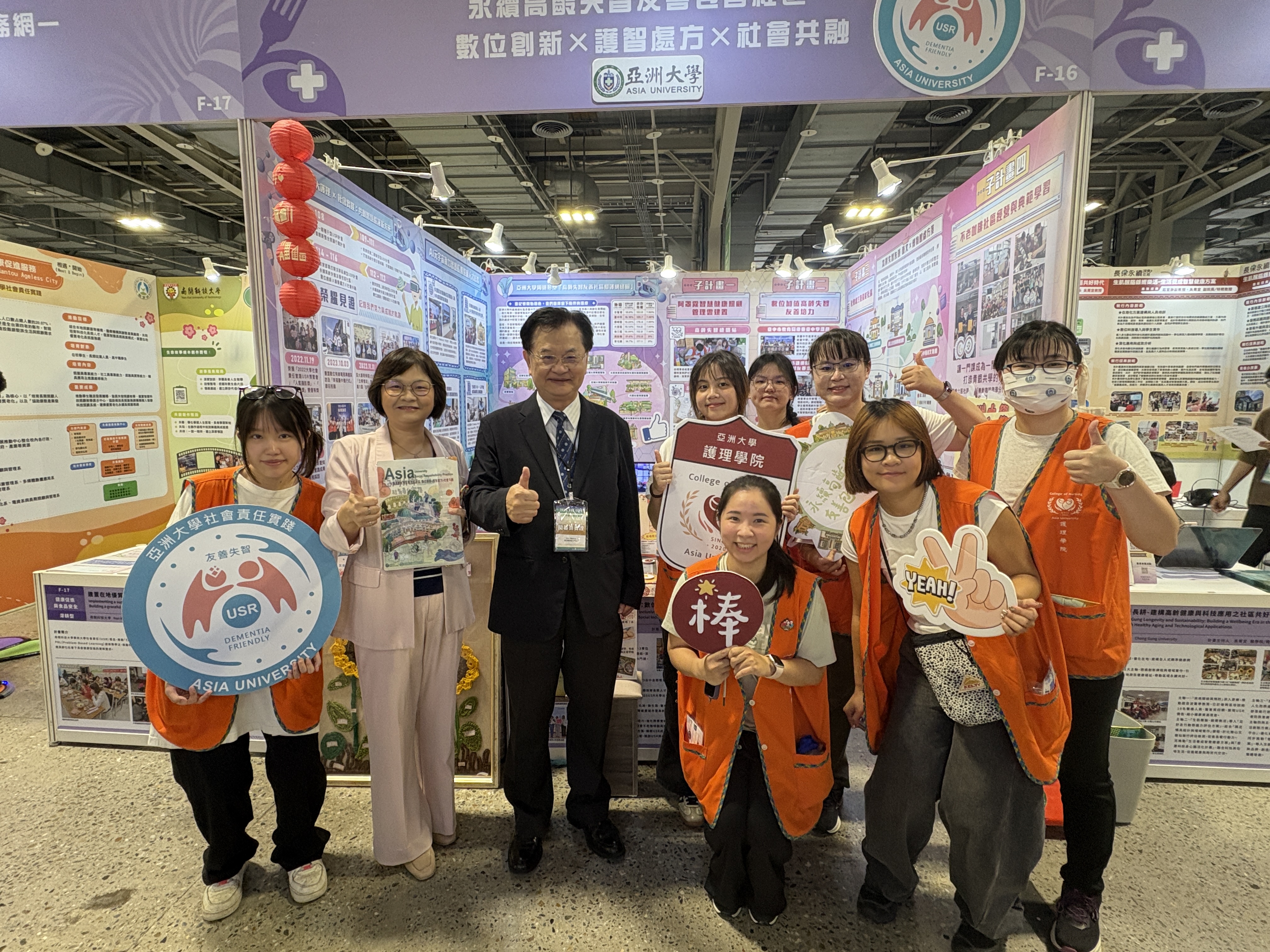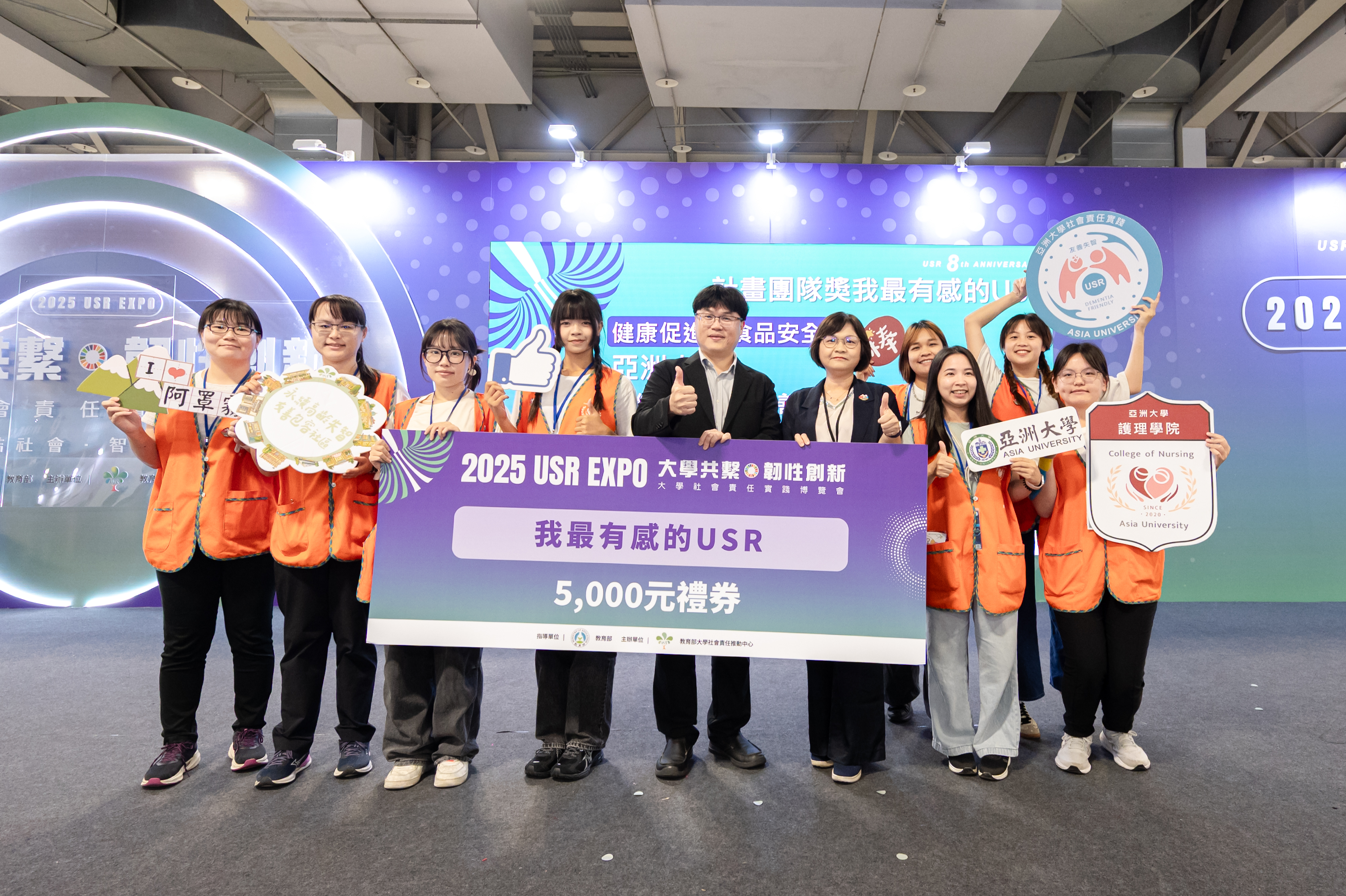
Asia University’s College of Nursing participated in the “2025 University Social Responsibility (USR) EXPO,” held by the Ministry of Education’s USR Promotion Center at the Taipei Expo Dome from September 12–13.
The College showcased eight years of achievements from its long-term USR project, “Sustainable, Dementia-Friendly, and Inclusive Communities: Digital Innovation × Cognitive-Health Prescriptions × Social Inclusion,” implemented in Taichung’s Wufeng, Dali, and Wuri Districts, as well as Caotun Township in Nantou County.
This year’s USR EXPO centered on the theme “University Synergy · Resilient Innovation,” gathering 121 universities and colleges and 257 projects, and attracting over ten thousand visitors over two days. The event highlighted how higher education institutions extend their influence from campus into local communities, fulfill social responsibility, engage in intergenerational learning, and demonstrate diverse pathways toward sustainable development. The Asia University College of Nursing USR team’s exhibition was especially well-received by high school students and the general public, earning First Place in the “Health Promotion and Food Safety” category of the USR Project Team Award – ‘Most Impactful USR.’
Dean and Project Director Dr. Hua-Shan Wu noted that this year’s USR EXPO integrated the Competency-based Curriculum of Taiwan’s 12-Year National Education Program, enabling high school teachers and students to understand how universities address societal needs through USR initiatives and inspiring youth to explore future career directions. Many high school students and community visitors were drawn to the exhibition booth to experience the smart-care innovations developed under the College’s USR project—including:
-
A VR-based “Behavioral and Psychological Symptoms of Dementia (BPSD) Care” simulation,
-
A generative-AI “Virtual Elder” comprehensive assessment system,
-
An AR-based “Moderate-Intensity Aerobic Dance” program,
-
A 3D naked-eye display frame showcasing museum artifacts, and
-
A generative-AI interactive dementia-education storybook designed for children.
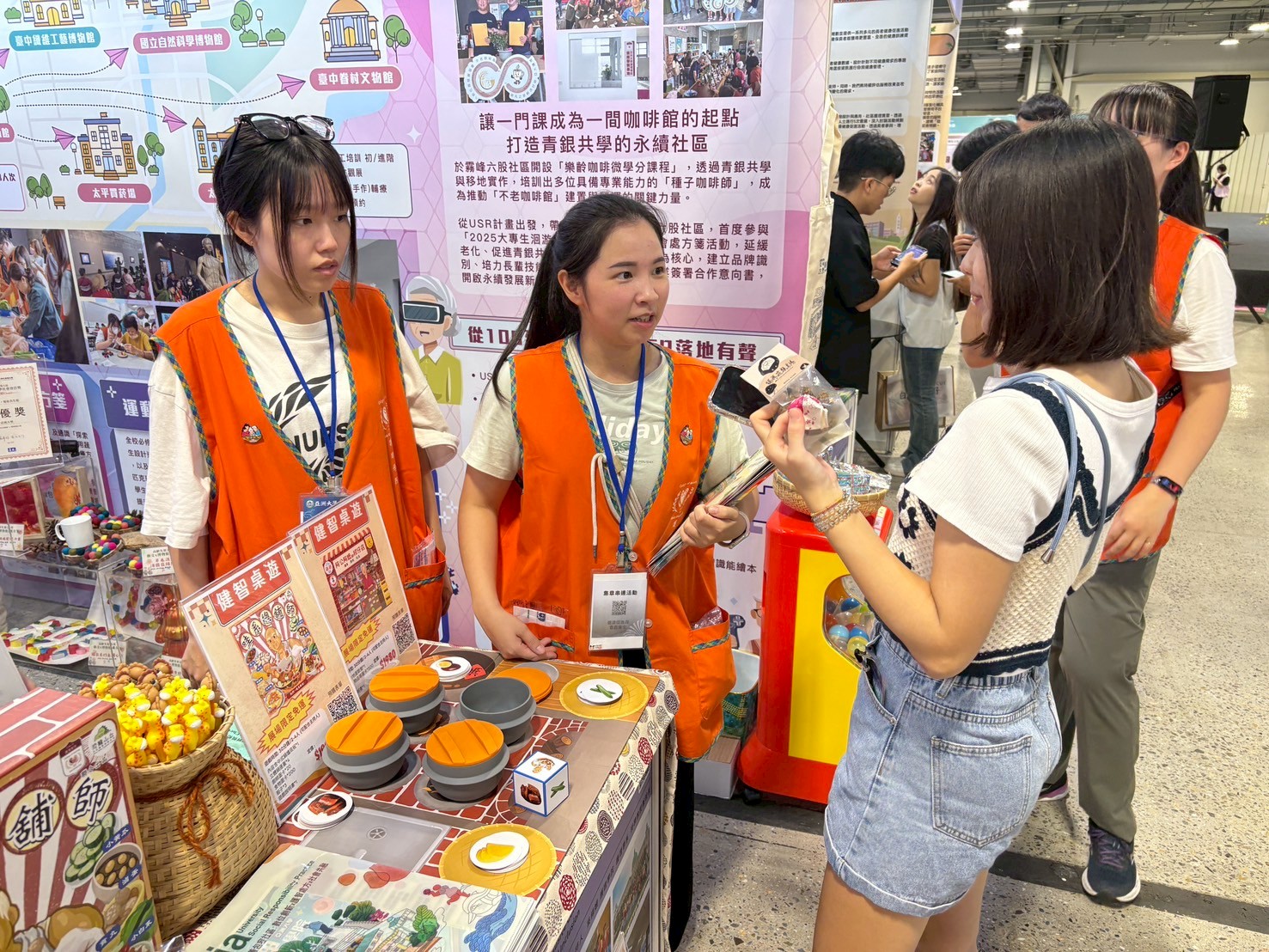
These technologies collectively demonstrated the project’s achievements in integrating smart technologies into dementia prevention and public advocacy. The Curious Caring Dietary Education Association, a long-term partner of the project, also participated by promoting Mediterranean diet education for dementia prevention. The association offered Mediterranean snacks and shared dietary guidelines, enabling visitors to learn about cognitive-health lifestyles through hands-on experience—further extending the multidimensional practice of health promotion within the USR framework.
Since 2018, the College of Nursing at Asia University has received ten consecutive years of support from the Ministry of Education’s USR Program. Grounded in the university’s strengths in smart healthcare, the College continues to integrate USR into academic curricula, develop AI-driven smart-care innovations, promote community empowerment through social prescriptions, and strengthen dementia-care resources in the Wufeng area—ultimately establishing an “Age-friendly Community Care Network.”
Building upon the successes of its dementia-friendly initiatives, the project will expand internationally next year through a Taiwan–Japan collaborative program on community long-term care immersive learning and autonomous learning. This marks a significant step toward sharing Asia University’s USR practice on a global stage and advancing sustainable development goals.