Asia University’s Department of Nursing has established Taiwan’s first daytime undergraduate International Nursing Program, aimed at cultivating globally mobile nursing professionals equipped to care for international patients and support cross-border medical missions.
Over the past six years, 165 students have participated in overseas internships, exchange programs, global health volunteer services, and international conferences through various initiatives—including the Ministry of Education’s “Shih Hsin Dream-Building Program,” the New Southbound Policy programs, summer exchanges, and international medical volunteer projects. Students have traveled to the United States, Australia, Japan, Singapore, Korea, and other countries for clinical training and academic exchange, receiving more than NT$7.4 million in combined support from the Ministry of Education and the University. These international experiences broaden students’ global perspectives and strengthen their qualifications for pursuing graduate studies abroad or obtaining foreign nursing licensure for overseas employment.
Dean of the College of Nursing and Chair of the Department of Nursing Dr. Hua-Shan Wu noted that the Department has signed long-term partnership agreements with numerous institutions—including Case Western Reserve University (USA), University of Wollongong and Western Sydney University (Australia), Inha University (Korea), Kansai University of International Studies (Japan), Shin-e Welfare Association (Japan), Nanyang Polytechnic (Singapore), Muhammadiyah University and Airlangga University (Indonesia)—providing stable and sustainable international mobility opportunities for students and faculty.
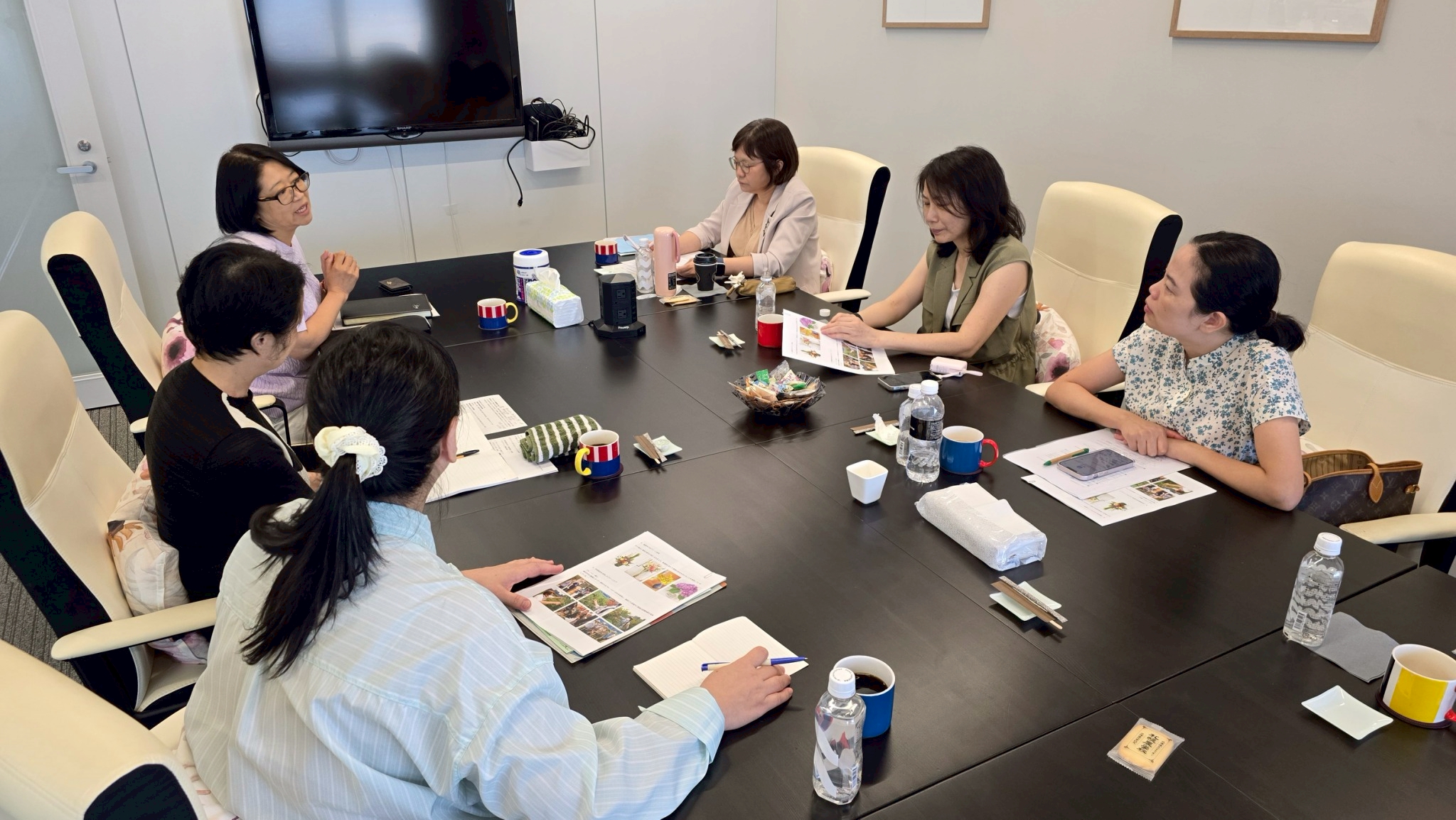
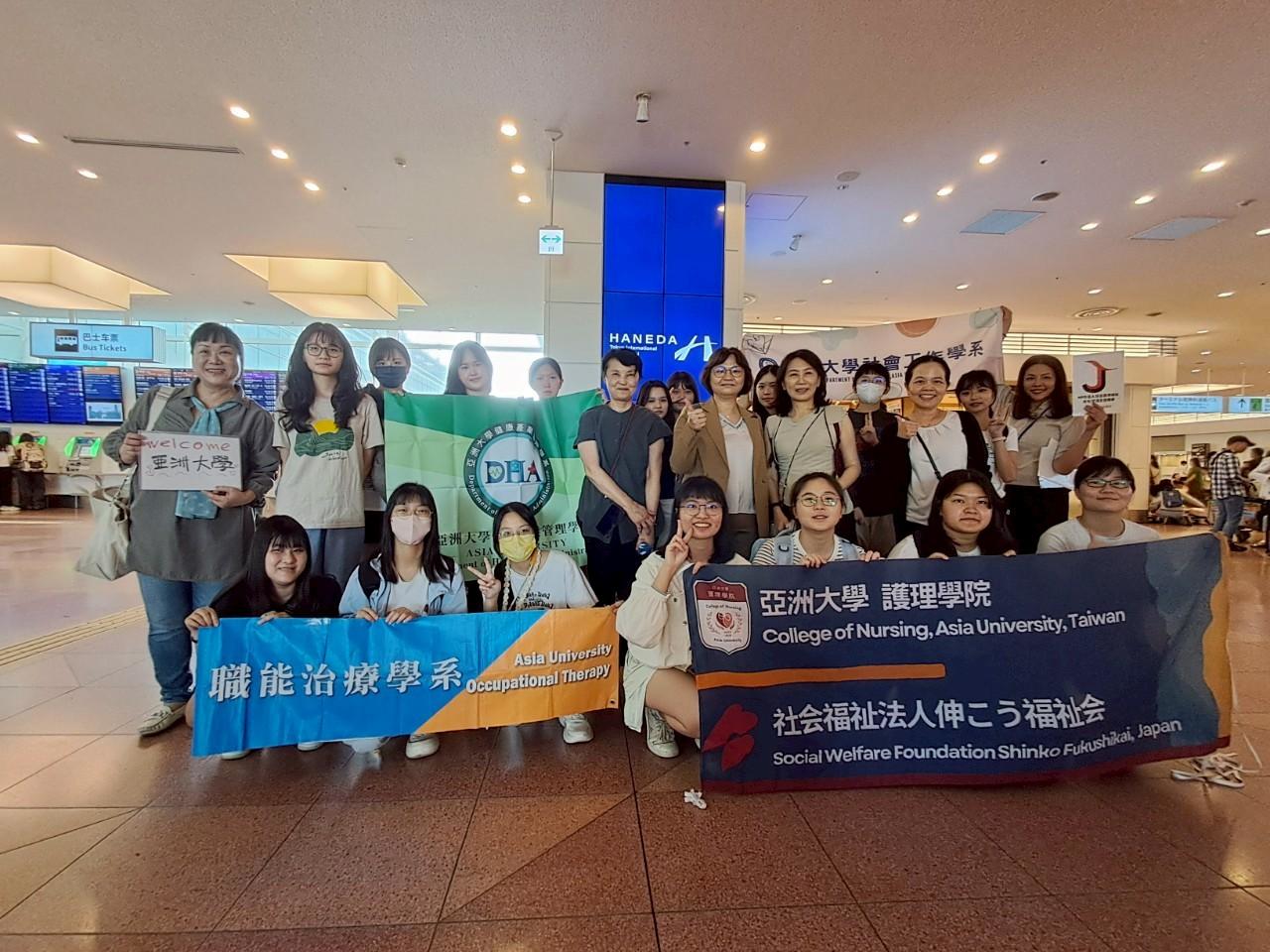
This summer, Dean Wu led a delegation to visit the Shin-e Welfare Association in Kanagawa, Japan, marking the tenth year of collaboration. Since 2016, the Department of Nursing has taken the lead in partnering with Shin-e Welfare Association, later joined by Asia University’s Departments of Social Work, Occupational Therapy, and Health Industry Management. In 2025, a total of 15 students from four departments will participate in the month-long internship in Japan through the Ministry of Education’s Dream-Building Program. Accompanied by Assistant Professors Nai-Huan Hsiung and Yu-Min Lai, Dean Wu visited students at their internship sites and attended the opening ceremony with Shin-e Welfare Association President Mr. Ken Endo, staff teams, and representatives from the NPO Japan–Taiwan Healthcare and Cultural Exchange Support Organization.
During the visit, Dean Wu was invited to present Asia University’s decade-long achievements in the Ministry of Education–funded USR (University Social Responsibility) Project, titled “Social Prescriptions Empowering Communities.” She highlighted how Asia University integrates social practice with local community partnerships, promotes diverse social prescription interventions, and develops digital and smart-care innovations. These practices have contributed to expanding dementia-care resources and building an age-friendly and dementia-inclusive community care network in the Wufeng region. The Shin-e Welfare Association expressed strong interest in social prescription implementation and the application of ICT in long-term care, hoping to deepen collaboration and learn from Asia University's social practice experience.
The delegation also visited Aoi Care, founded by Mr. Tadasuke Kato, a pioneering community-based care model in Japan integrating independent living support, multi-functional small-scale care, and group-home services. Emphasizing a “person-centered” philosophy, Aoi Care fosters dignity, recognition, and belonging for older adults while promoting intergenerational engagement through work-exchange housing and community café gatherings.
Additionally, guided by Shin-e Welfare Association staff, the team conducted field observations of various innovative long-term care service models, including:
-
“Cross Heart Ishinazaka–Fujisawa,” a fee-based senior residence featuring a unique system that redesigns tasks for older adults, allowing residents to engage in greenhouse gardening or participate in activities to earn tokens used for purchases—promoting physical activity and a sense of accomplishment.
-
“Cross Heart Konan–Yokohama,” a facility offering an integrated “four-in-one” model of home care, day care, short-term stays, and home nursing services.
-
Bingogafuchi Community Care Plaza in Isogo Ward, Yokohama, a community-integrated care service center providing medical, social-welfare, and policy consultation services.
Following the site visits, the team found strong similarities between Isogo Ward in Yokohama and Wufeng District in Taichung, particularly regarding population aging and the need for dementia prevention and health promotion. Both sides therefore agreed to designate Isogo Ward as the site for cross-national social practice collaboration. Next year, under the theme “Health Creation in Isogo Community,” faculty from Asia University, instructors from Yokohama, and local practitioners will jointly implement the Taiwan–Japan Community Long-Term Care Immersive Learning and Social Practice Program. The initiative aims to cultivate students’ cross-national social practice competencies, revitalize long-term care development in both regions, and contribute to the shared vision of “aging in place,” showcasing Taiwan–Japan collaboration and innovation in health and social care.